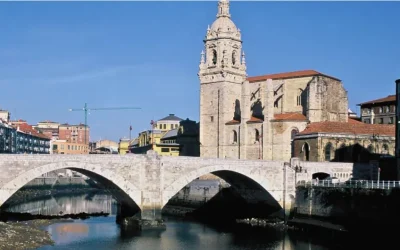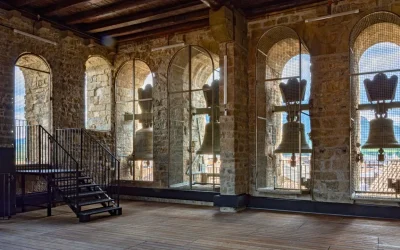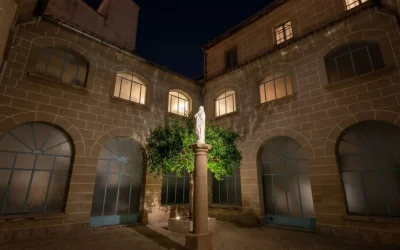
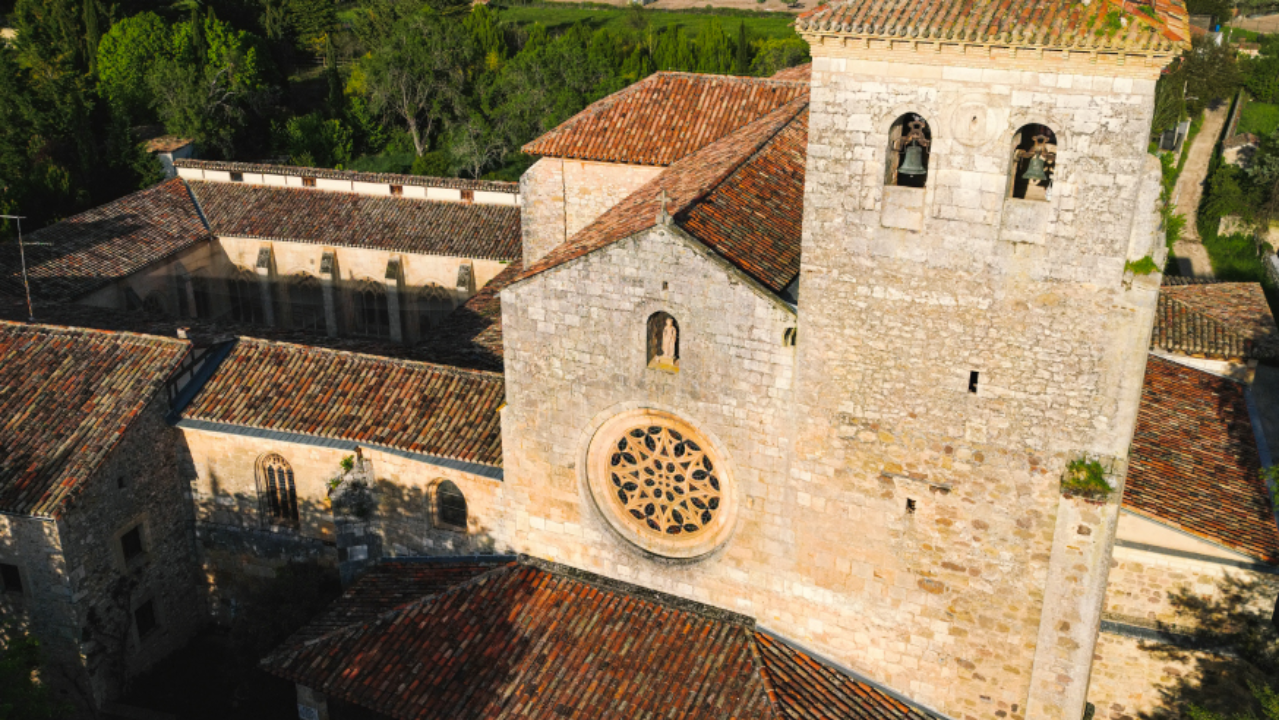
The Arlanza Cathedrals in Burgos are four monumental churches hidden in the Arlanza river valley, spanning five centuries of Castilian religious art from Romanesque to Baroque. The Collegiate Church of Covarrubias and the churches of Villahoz, Mahamud and Santa María del Campo form one of Spain’s most remarkable and least-known heritage clusters, now open to the public as part of the Expedición 4.0 al Medievo project. If you’re looking for a cultural getaway away from mass tourism, with authentic heritage, Castilian cuisine and endless landscapes, this is your route.
What are the Arlanza Cathedrals of Burgos?
The Arlanza Cathedrals are a heritage itinerary made up of four temples located in the Arlanza river valley, between the Sierra de la Demanda and the wheat fields of Campo de Muñó, in the province of Burgos. The group includes the Collegiate Church of San Cosme y San Damián in Covarrubias, the Church of Nuestra Señora de la Asunción in Villahoz, the Church of San Miguel in Mahamud, and the Church of la Asunción in Santa María del Campo.
The name is no coincidence: the sheer monumentality of these buildings, raised in the same white limestone that clads Burgos Cathedral, turns them into true “cathedrals” built by rural communities who translated their faith into architectural excellence. Visiting them means witnessing the full evolution of Castilian religious art, from Romanesque to late Gothic, from Renaissance to Baroque.
The 4 churches of the Arlanza valley, one by one
Covarrubias: county pantheon and cradle of Castile
The route begins in Covarrubias, a town of early medieval origins turned capital of the Infantazgo in the 10th century by Fernán González and his son García Fernández. The Collegiate Church of San Cosme y San Damián, begun in 1474 over a Romanesque temple, offers a masterful reading of late Castilian Gothic: Latin-cross floor plan, stepped naves and star-ribbed vaults. Its main altarpiece, gilded in 1753 by the Cortés del Valle brothers and Francisco Echevarría, floods the sober Gothic stone with Baroque brilliance.
Fernán González, founder of Castile, rests in the presbytery, while the Gothic cloister holds the tomb of Princess Kristina of Norway, wife of one of Castile’s infantes. The adjoining sacred art museum houses exceptional pieces by Diego de la Cruz, Pedro Berruguete and other Hispano-Flemish works of great value.
Villahoz: the Burgos hallenkirche
After passing the ducal town of Lerma, the route descends into Campo de Muñó. In Villahoz, a royal town documented since 1074 and archpriestly seat for centuries, stands the Church of Nuestra Señora de la Asunción, thoroughly transformed in the 16th century. It is a hall-church, or hallenkirche, model: three naves of equal height and star vaults creating an open space designed for Renaissance preaching.
The southern portal, attributed to Francisco de Colonia, evokes the last flourishes of Isabelline Gothic. The tower, rebuilt in 1761 by Julián de Arbaiza, features a striking checkerboard of contrasting limestone ashlars. Inside, the church holds one of the finest collections of Baroque altarpieces in the province of Burgos.
Mahamud: liturgy in relief
A few kilometres away lies Mahamud, whose name recalls Mozarabic resettlement. The Church of San Miguel Arcángel, begun in the 13th century, combines an early Gothic western portal, a Flamboyant Gothic apse from the late 15th century, and a Baroque south façade from the 18th century. Inside shines the Renaissance main altarpiece, carved between 1566 and 1573 by Domingo de Amberes: a masterpiece with 39 scenes carved and polychromed with Flemish precision.
This church was also the setting of a defining historical episode: in 1507, in the presence of King Ferdinand the Catholic, Cardinal Cisneros received here the cardinal’s biretta sent from Rome.
Santa María del Campo: the beacon of Campo de Muñó
The route culminates in Santa María del Campo, a prosperous medieval town that was Head of the Behetrías of Old Castile from the time of John II and, in 1507, the temporary seat of Queen Joanna I. The Church of la Asunción, built between the 13th and 18th centuries, condenses centuries of Castilian religious art.
Its monumental plateresque tower stands out, begun by Diego de Siloé in 1527 and completed by Juan de Salas in 1538: nearly 60 metres of Renaissance elegance adorned with pilasters, medallions and grotesques, considered one of the finest bell towers of the Spanish Renaissance. Inside, visitors find a Gothic cloister with flamboyant tracery, a Gothic-Mudéjar choir, Flemish tapestries, silverwork and panels attributed to Pedro Berruguete.
Summary table: the 4 Arlanza Cathedrals of Burgos
| Church | Dominant style | Don’t miss |
|---|---|---|
| Collegiate Church, Covarrubias | Late Gothic with Baroque altarpiece | Tomb of Fernán González and Princess Kristina of Norway |
| Asunción, Villahoz | Renaissance hall-church | Portal by Francisco de Colonia and checkerboard tower |
| San Miguel, Mahamud | Early and Flamboyant Gothic | Altarpiece by Domingo de Amberes, 39 scenes |
| Asunción, Santa María del Campo | Gothic-Renaissance synthesis | Plateresque tower by Diego de Siloé, panels by Berruguete |
The Arlanza Cathedrals within Expedición 4.0 al Medievo
The Arlanza Cathedrals of Burgos are one of the 13 heritage sites that make up Expedición 4.0 al Medievo, a cultural project led by eight Spanish dioceses and backed by Spain’s Ministry of Industry and Tourism through Next Generation EU funds. You can explore other sites on the route, such as the Silentia experience in Granada or Ecos de la Seo in Jaca.
While Granada offers Carthusian spirituality and Jaca the power of medieval women, the Arlanza Cathedrals embody rural Castile: the mastery of stonemasons, the pride of small towns, and five centuries of art condensed into four extraordinary temples.
Practical information to visit the Arlanza Cathedrals
Opening hours
10:30 am–2:00 pm and 4:00 pm–6:00 pm. Closed on Tuesdays.
Prices
€5 per church.
Contacts to book a visit
- Villahoz: Matías – +34 689 66 06 52
- Mahamud: Adela – +34 628 55 89 91
- Santa María del Campo: Teresa and Jorge – +34 686 85 73 82
Getting there
The four towns are located in southwestern Burgos province, less than 30 minutes apart by car. From Burgos city, Covarrubias is about 40 km away; from Valladolid, Santa María del Campo is just over an hour. Driving is the best way to plan the route while discovering the rural charm of the Arlanza valley.
Frequently asked questions about the Arlanza Cathedrals
How many churches make up the Arlanza Cathedrals of Burgos?
The Arlanza Cathedrals comprise four temples: the Collegiate Church of San Cosme y San Damián in Covarrubias, the Church of Nuestra Señora de la Asunción in Villahoz, the Church of San Miguel in Mahamud, and the Church of la Asunción in Santa María del Campo.
Why are they called “Cathedrals” if they’re not episcopal seats?
They earned the name for their exceptional monumentality in a rural setting: the quality of the limestone, the mastery of the stonemasons, and later Renaissance and Baroque renovations make them rival true cathedrals in grandeur, even though administratively they are parish churches or a collegiate church.
How much does it cost to visit the Arlanza Cathedrals?
Admission costs €5 per church. Visits must be arranged in advance with the local contacts responsible for each site.
How much time do I need to see all four churches?
Set aside at least a full day to visit the four Arlanza Cathedrals at a relaxed pace. Combined with local food and countryside routes, a full weekend is ideal.
How do the Arlanza Cathedrals relate to Expedición 4.0 al Medievo?
The Arlanza Cathedrals are one of the 13 heritage sites that make up Expedición 4.0 al Medievo, a cultural project led by eight Spanish dioceses with support from Spain’s Ministry of Industry and Tourism and Next Generation EU funds.
Plan your trip to the heart of Castile
The Arlanza Cathedrals of Burgos prove that some of Spain’s most astonishing heritage treasures aren’t in big cities, but in small Castilian towns where stone still speaks. Visiting Covarrubias, Villahoz, Mahamud and Santa María del Campo means witnessing five centuries of faith, art and power, and discovering an essential chapter of Spanish history.
Ready for the expedition? Find full details on the Arlanza Cathedrals and every other site at expedicionmedievo.es.