Updated: November 2026
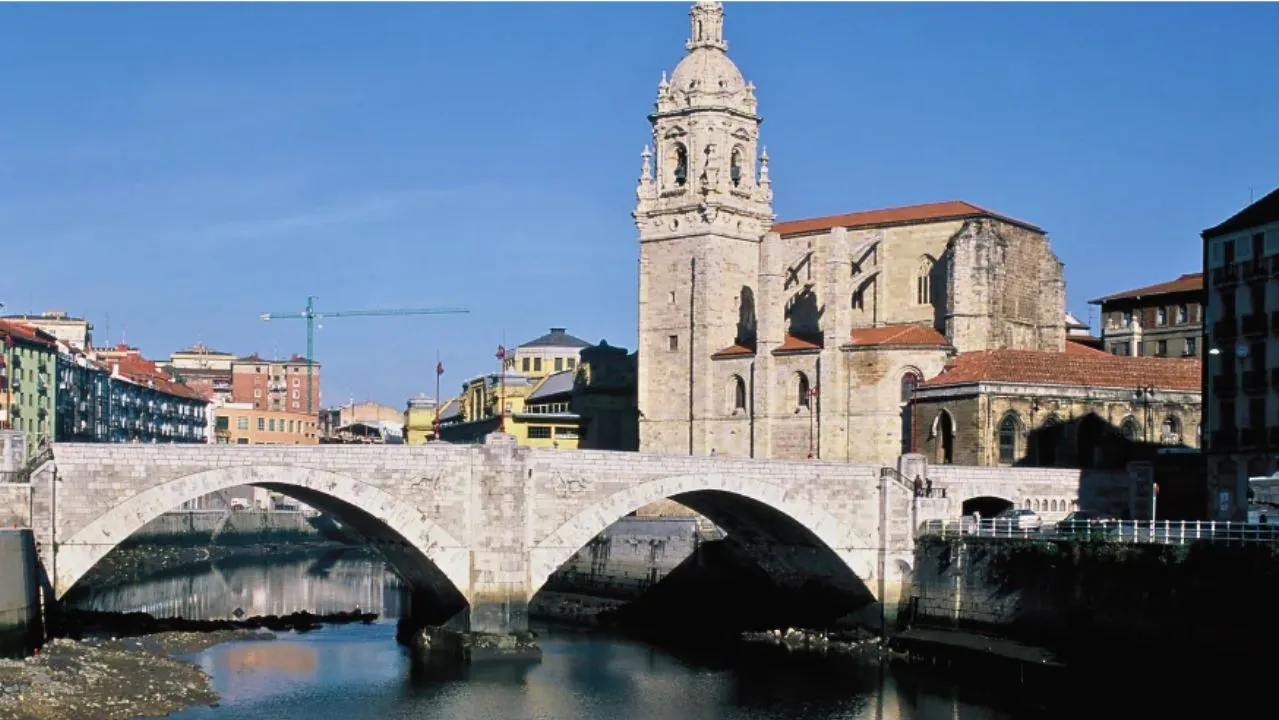
The Church of San Antón appears on Bilbao’s coat of arms because it stands on the spot where the town was born. Beside a ford on the ría there was first a warehouse for goods, then a bridge and a fortress (alcázar), and the church that gives the bridge its name was built on the site of that fortress. From that cluster came the image Bilbao uses to represent itself: a two-arched bridge with the church on top, the waters of the ría and two wolves. Today you can step inside with an immersive experience of 45–60 minutes, from €8.
San Antón is Bilbao’s site within Expedición 4.0 al Medievo, a network of 13 heritage sites across Spain. This guide looks at what the coat of arms actually shows, how Bilbao began beside the ría, what happened to the church over the centuries and how to visit it today.
Bilbao’s coat of arms, element by element
The town’s coat of arms reads almost like a map of its origins. According to its heraldic description, it shows a two-arched bridge over the waves of the ría, with the Church of San Antón on top and two wolves beside it. Each figure points to something specific:
| Element | What it represents |
|---|---|
| Two-arched bridge | The San Antón Bridge, the crossing over the ría that already existed before the town was founded in 1300 |
| Church of San Antón | The church built on the site of the medieval fortress, right next to the bridge |
| Waves of the ría | The Nervión estuary, the reason for Bilbao’s trade and port |
| Two wolves | An emblem derived from the badge of the House of Haro, the founders of the town |
Where Bilbao was born: a ford, a rock and wool caravans
Before it was a town, this corner of the ría was a place of passage. There was a ford, a narrowing of the channel that made it easier to cross from one bank to the other, and fourteenth-century documents already attest to a solid stone bridge at that point, as this study of the old San Antón Bridge (in Spanish) explains.
According to the Expedición’s account, for about three centuries before the church existed there was a warehouse on a rock and a small port here, beside the ford where caravans of Castilian wool crossed. It was a small trading post, but a well-placed one.
In 1300, Diego López de Haro granted the Carta Puebla, the town charter, and the trading settlement ended up inside a wall that defended it and protected it from floods. The street layout still recognisable in the Casco Viejo (Old Town) comes from that medieval organisation, with the Siete Calles (Seven Streets) as its most visible legacy.
From fortress to church: a timeline of San Antón
The church you see today is the result of several centuries of building work, and sources do not agree on the exact dates of the Gothic extension. This is the general sequence:
| Moment | What happens |
|---|---|
| Until 1300 | A ford, a warehouse and a port beside the ría; the bridge already exists as a crossing between the two banks |
| 1300 | Carta Puebla granted by Diego López de Haro: the town of Bilbao is officially born |
| 1366 | The alcázar is pulled down and a primitive church is built on its site |
| 1433 | The church is consecrated |
| Second half of the 15th century | Gothic extension, giving the church a form close to today’s |
| 16th century | Renaissance doorway, set within a porch of notable monumentality |
| 1774 | Late Baroque tower |
| Late 19th century | The medieval bridge is demolished, amid controversy. The current one is later, keeps the name and evokes the original |
| 1980s | The 1983 floods destroy much of the church’s movable heritage, and soon afterwards it is declared a National Historic-Artistic Monument |
The consecration, doorway and tower details come from the Turismo Euskadi page on the Church of San Antón (in Spanish), which also highlights a piece that survived the disasters: the Plateresque altarpiece of the Pietà.
Why San Antón and not another symbol?
Three reasons reinforce one another:
- It is the point of origin. The church stands where the town began, and for centuries it was far more than a church: a meeting place, a gathering space and a symbolic reference point for the community.
- It joins bridge and church in a single image. The bridge and the church formed an unmistakable ensemble on the banks of the ría, easy to draw and easy to recognise.
- It speaks of who founded the town. The wolves recall the House of Haro, the same family that granted the Carta Puebla in 1300.
San Antón is not the oldest church in the city, but it is one of the most distinctive, and that identification has lasted to this day: Athletic Club, for instance, put the San Antón Bridge and the wolves of Haro on its own crest.
How to visit the Church of San Antón today
Since joining the Expedición, the church offers a visit that turns the origins of Bilbao into an immersive story told through light, sound and narration. Here are the practical details, taken from the official page for the site:
| Detail | Information |
|---|---|
| What it is | Immersive experience in the Church of San Antón about the urban origins of Bilbao |
| Where | Church of San Antón, Calle Ribera, s/n, 48005 Bilbao |
| Opening hours | 10:30 a.m. to 6:00 p.m., continuous |
| Duration | About 45–60 minutes, flexible depending on format and pace |
| Price | From €8 |
| Guided visit (optional) | €15 supplement. Advance booking required; small groups of up to 20 people |
| Languages | Spanish, Basque, English and French |
| Booking | On the Expedición website: book your visit |
| Phone | +34 944 15 36 27 |
What the experience includes
- A self-guided tour of the site, at your own pace.
- Content available on your phone or on tablets provided during the visit.
- Historical interpretation of the urban origins of Bilbao.
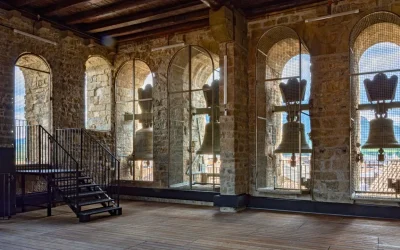
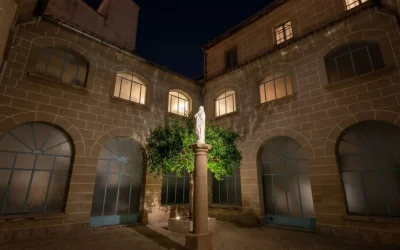
- Artistic lighting that highlights the key features of the church.
- An atmosphere that recreates the life and pulse of the medieval city.
The guided visit
If you would rather go with someone, the guided visit is led by a specialist guide who goes deeper into the site’s historical, social and symbolic content. It is optional, needs advance booking and takes place in groups of up to 20 people.
Before you go
- Accessibility: partially adapted access.
- Headphones: recommended for better sound on your phone.
- Basic rules: respect the atmosphere of the tour, take photos without flash and follow the staff’s instructions.
San Antón if you only have a few hours in the Casco Viejo
The church sits on the bank of the ría, next to the Mercado de la Ribera and the Siete Calles. The experience lasts 45 to 60 minutes and opening hours are continuous from 10:30 a.m. to 6:00 p.m., so it fits between other Old Town visits without taking up half a day, and it is available in four languages.
A good idea for a short trip is to start here: understanding where the town was born before walking its streets makes the rest of the walk make more sense. If this kind of plan appeals to you, the guide to medieval tourism in Spain (in Spanish) brings together the Expedición’s 13 sites.
Frequently asked questions
What is on Bilbao’s coat of arms?
A two-arched bridge with the Church of San Antón on top, over the waves of the ría, and two wolves that come from the badge of the House of Haro, founders of the town.
Why is the Church of San Antón on Bilbao’s coat of arms?
Because it stands at the point where the town was born, next to the first bridge over the ría and on the site of the old alcázar. The bridge and the church form the most recognisable image of Bilbao’s origins.
What do the wolves on Bilbao’s coat of arms mean?
They are an emblem derived from the badge of the House of Haro, the family that founded the town and granted the Carta Puebla in 1300.
When was the Church of San Antón built?
The alcázar was demolished in 1366 and a primitive church was built on its site. The church was consecrated in 1433 and extended in the second half of the 15th century. The doorway is Renaissance and the tower dates from 1774.
Can you visit the Church of San Antón in Bilbao?
Yes. The Expedición offers an immersive experience of 45–60 minutes, from 10:30 a.m. to 6:00 p.m. continuously, with tickets from €8, bookable on its website.
What languages is the visit available in?
Spanish, Basque, English and French.
Is there a guided visit at San Antón?
Yes, as an option. It carries a €15 supplement, requires advance booking and is limited to groups of up to 20 people.
Ready to see where Bilbao was born? Book your visit to San Antón, soul and origin of Bilbao at book your visit. For questions about opening hours or guided visits, call +34 944 15 36 27.